
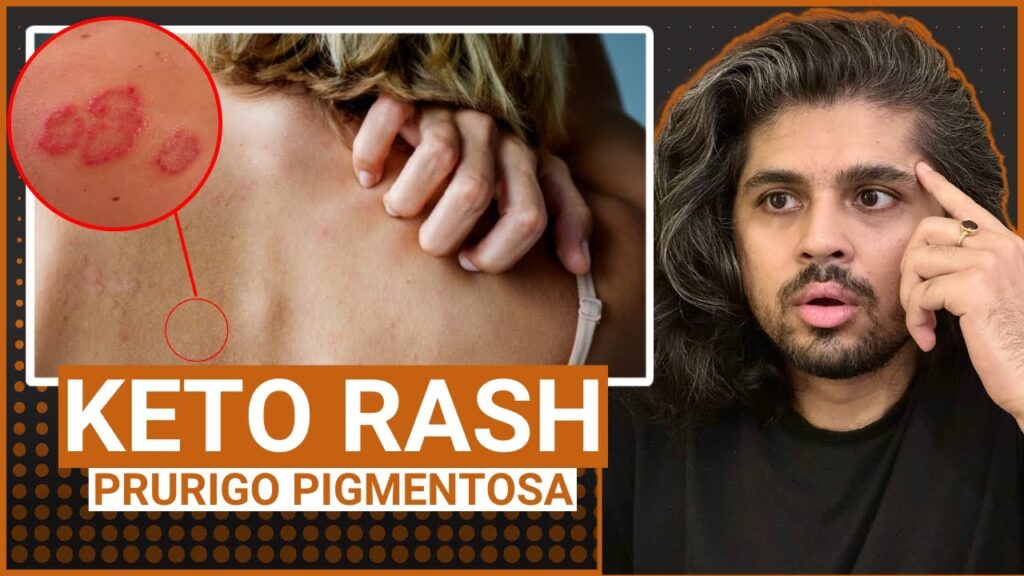
You’ve survived the Keto Flu. You’ve mastered your Intermittent Fasting window. You’re finally seeing the numbers on the scale drop. But then, it starts—a small, itchy red patch on your neck or chest. You ignore it, but the next day it’s spread to your back. It’s itchy, it’s red, and it’s starting to look like a map of tiny blisters.
Welcome to Prurigo Pigmentosa, more commonly known in our community as the Keto Rash.
At Ketorets, we know that seeing a rash can be terrifying. Your first instinct might be to panic, think you’re allergic to fat, and go buy a loaf of bread to “fix” it. Stop. Before you make a rash decision (pun intended), let’s break down exactly what this is, why it happens, and how we manage it without throwing away all your progress.
1. What is Keto Rash? (Identifying the Enemy)
Keto rash is a rare but frustrating inflammatory skin condition. It usually starts as small, red, raised bumps that look like a cross between a heat rash and an allergy.
Where does it show up?
Unlike a typical food allergy that can appear anywhere, Prurigo Pigmentosa is very specific. It almost always starts on the neck, chest, or upper back. It’s symmetrical—meaning if it’s on one side of your chest, it’s likely appearing on the other. If you notice a rash on your hands or feet first, it might just be a sweat rash or a reaction to a new detergent, rather than a true keto rash.
The Stages of the Rash
- The Itch: It starts with an intense, annoying itch.
- The Bumps: Small red spots (papules) appear.
- The Blisters: In some cases, these spots turn into fluid-filled cysts or lesions.
- The Pigment: As the rash heals, it leaves behind a brownish, “net-like” pattern on the skin that can take weeks to fade.
2. Why Does Keto Rash Happen?
While science is still catching up, we’ve observed a few key triggers at Ketorets after working with hundreds of members.
The Acetone Factor
When your body burns fat, it produces three types of ketones: Acetoacetate, Beta-hydroxybutyrate, and Acetone. Acetone is often excreted through your breath and your sweat. When you are in deep ketosis, the concentration of acetone in your sweat increases. If this sweat stays on your skin for too long, it can cause irritation or an inflammatory response in certain individuals.
The pH Shift
Your skin usually sits at a pH of 4.5 to 5.5. Rapid fat loss and the shift into ketosis can slightly alter your body’s chemistry. When your skin’s pH becomes too acidic or too alkaline, it loses its protective barrier, making you more susceptible to itchy skin on keto diet triggers.
Rapid Fat Loss & Toxins
Fat cells are where our bodies store many fat-soluble toxins. When you lose weight very quickly—which often happens in the first few weeks of keto—those toxins are released into the bloodstream and excreted through the skin. For some, this “detox” phase manifests as a rash.
3. The Biggest Mistake: “The Carb Trap”
The most common advice you’ll find online for how to get rid of keto rash is: “Just eat some carbs.” This is the worst thing you can do. When you introduce carbohydrates abruptly, you spike your insulin. High insulin levels lead to systemic inflammation. If you already have an inflammatory skin condition like a rash, adding more inflammation is like throwing gasoline on a fire. You might stop the “ketosis” part of the rash, but you’ll likely make the redness and swelling much worse. Plus, you’ll have to deal with the Keto Flu all over again once you try to get back on track.
4. How to Manage the Rash: The Ketoret Protocol
If you find yourself dealing with ketogenic diet skin problems, follow these steps to manage the symptoms while staying in fat-burning mode.
I. Don’t Scratch
It sounds simple, but scratching causes micro-tears in the skin, which can lead to secondary bacterial infections. If the itch is unbearable, use an anti-itching powder or an alkaline-based cooling cream.
II. Wear Loose Clothing
Friction and sweat are the two biggest “aggravators” of keto rash. If you’re wearing tight gym gear or polyester fabrics, you’re trapping the acetone-heavy sweat against your skin. Switch to loose, breathable cotton clothes until the rash subsides.
III. Adjust Your “Trigger Foods”
Sometimes, the rash is a combination of ketosis and a sudden increase in a specific food. Temporarily cut back on eggs, dairy (cheese), and nuts. These are common allergens that can aggravate an existing skin irritation. Once the rash clears, you can reintroduce them one by one.
IV. Topical Relief
- Coconut Oil: It’s anti-inflammatory and anti-fungal. Applying a thin layer of organic coconut oil can soothe the irritation.
- Cold Showers: Immediately after a workout take a cold shower to wash away the acetone-laden sweat before it can irritate your pores.
5. When Should You Panic?
In 99% of cases, the keto rash is temporary. It’s your body’s way of saying, “I’m changing!” Most of the time, it disappears on its own within 2 to 3 weeks as your body becomes better at utilizing ketones rather than sweating them out.
However, you should consult a डर्मेटोलॉजिस्ट (Dermatologist) if:
- The rash lasts longer than 4 weeks despite following the tips above.
- You see significant blistering or signs of infection (pus, extreme pain).
- The rash is spreading to your face or eyes.
- The itch is preventing you from sleeping, which as we know from our Intermittent Fasting guide, will spike your cortisol and ruin your progress.
No. It is a skin-deep inflammatory response. It doesn’t affect your internal organs, but it can be very uncomfortable.
Absolutely not. In my experience with over 1200+ members, only a tiny fraction (less than 1%) ever experience true Prurigo pigmentosa keto.
Yes. The “Post-Inflammatory Hyperpigmentation” (the brown spots) can take a few weeks or months to fade completely, but they are not permanent scars.
Be careful. ACV is acidic. If your skin’s pH is already disrupted, ACV might cause a burning sensation. Stick to soothing, alkaline-based moisturizers.
Final Thoughts: Stay the Course
The keto rash is a hurdle, not a wall. It’s a sign that your metabolism is undergoing a massive shift. At Ketorets, we’ve seen people overcome this and go on to achieve incredible health transformations.
Don’t let a temporary skin irritation push you back into the cycle of sugar addiction and insulin resistance. Keep your skin clean, keep your clothes loose, and keep your goals in sight.
If you’re struggling with a rash and need a personalized adjustment to your macros, don’t hesitate to reach out. Fill out the form on kits.com or DM me directly—let’s solve this together without breaking your ketosis!